


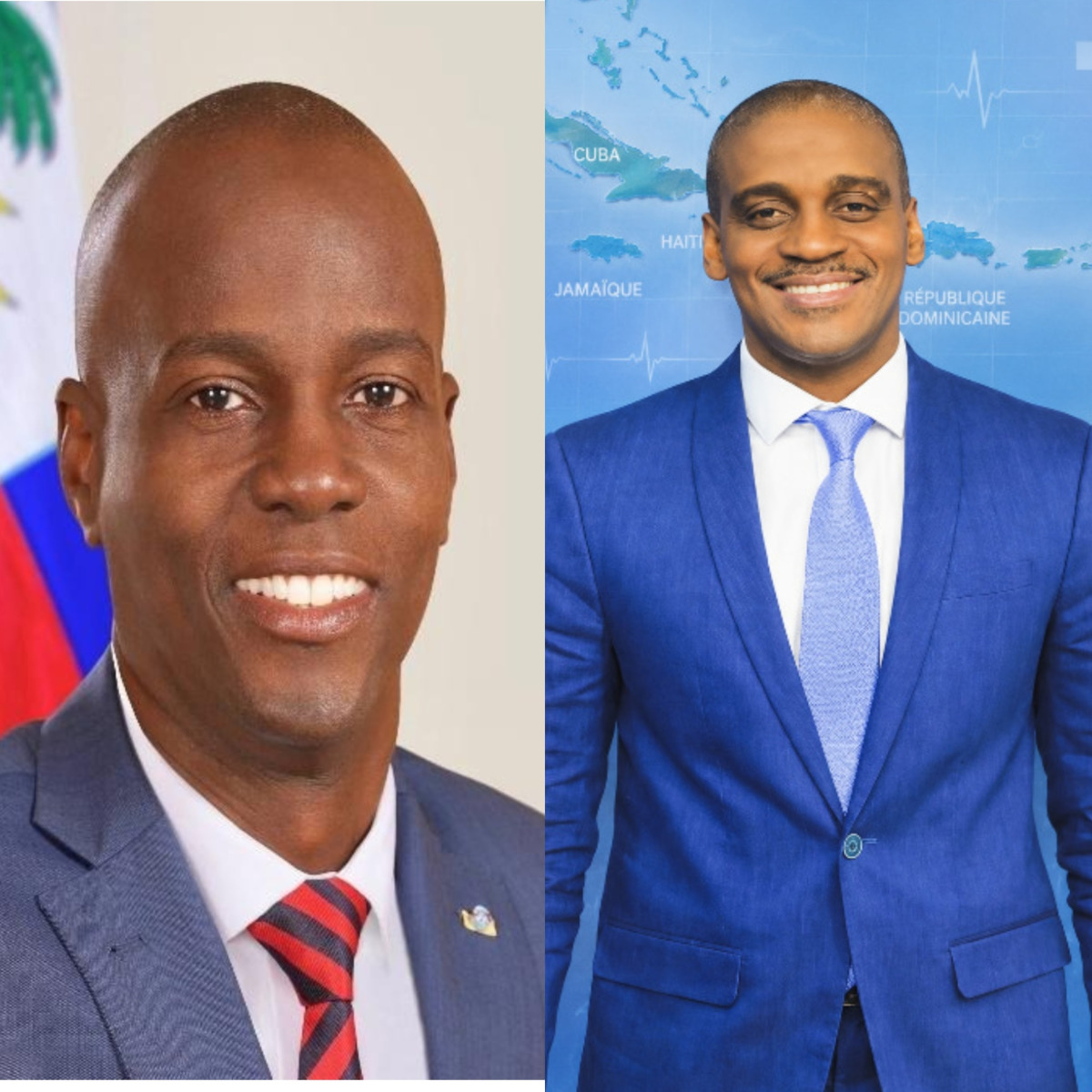
In a series of open letters addressed to the Miami Herald, Noticias Caracol, and the New York Times, Attorney Newton Louis St Juste calls for a reexamination of certain media narratives published after the assassination of Haiti’s former president, in light of evidence made public through U.S. judicial proceedings.
Editorial Foreword: CPGNNews | Investigations Desk
CPGNNews has obtained a series of open letters written by Haitian lawyer Newton Louis St Juste and addressed to three major international newsrooms that covered the assassination of President Jovenel Moïse. In these letters, the attorney invites a revisiting of certain media narratives published in the months following the events, in light of information that has gradually emerged through U.S. judicial proceedings.
Without questioning the journalistic work carried out at the time of the events, this initiative falls within a broader reflection on the coexistence of narratives produced under different timelines: that of immediate news reporting and that of judicial proceedings.
METHODOLOGICAL NOTE FROM THE EDITORIAL TEAM
CaribPulse Global News Network (CPGNNews) is an independent media outlet, free from governmental, partisan, or commercial affiliation. Our editorial line is based on a core principle: documenting facts from verifiable sources, systematically distinguishing initial media narratives from publicly available judicial evidence.
As part of this investigation, CPGNNews has:
- Reviewed the complete open letters from Attorney Newton Louis St Juste dated May 22, 2026;
- Analyzed articles published between 2021 and 2022 by the Miami Herald, Noticias Caracol, and the New York Times;
- Examined public judicial documents from U.S. federal proceedings (USA v. Rodolphe Jaar, 2023; confidential informant deposition, 2024; USA v. Christian Emmanuel Sanon, 2025);
- Contacted the three newsrooms on May 22 and 23, 2026, via their official channels. No response had been received at the time of publication. Any eventual responses will be the subject of a separate editorial follow-up.
I. A New Chapter in the Public Debate on the Jovenel Moïse Case
Nearly five years after the assassination of Haitian President Jovenel Moïse (July 7, 2021), the case continues to have repercussions across several distinct spheres: judicial, media, and diplomatic.
The proceedings initiated in the United States have gradually helped structure part of the criminal narrative through hearings, judicial documents, and publicly released testimonies. At the same time, international media outlets played a decisive role in the immediate coverage of the event, a context marked by high uncertainty and the rapid circulation of sometimes fragmentary information.
Against this backdrop, the initiative of Attorney Newton Louis St Juste is neither a legal proceeding nor an institutional challenge. It belongs to a different register: that of public interpellation directed at international newsrooms.
Through several open letters dated May 22, 2026, the Haitian lawyer invites a reexamination of certain media narratives published in the months following the assassination, in light of evidence gradually made accessible through U.S. judicial proceedings.
His approach rests on a central question: how do narratives constructed in the first hours of a crisis evolve when confronted with the long timeline of judicial proceedings?
II. Media and Justice: Two Timelines for Producing Information
Major political events generally give rise to two forms of information production that do not follow the same logic.
The first is emergency journalism. It operates on a short timeline, often characterized by incomplete access to sources, unverified information, and high publication pressure. In this context, media outlets seek to produce provisional explanations that make an unfolding event intelligible.
The second is judicial proceedings. These unfold over a long timeline, governed by rules of evidence, adversarial testing, and gradual validation of evidence entered into the record. They result in public documents, hearings, and judicial decisions that progressively structure a criminal understanding of the facts.
In the case of Jovenel Moïse’s assassination, these two timelines coexisted from the first days of July 2021.
Various media hypotheses emerged in a context of informational uncertainty. Some were reported based on anonymous sources or elements not yet publicly verifiable at the time.
The judicial proceedings initiated later consolidated a body of information primarily concerning the logistical, organizational, and criminal aspects of the conspiracy.
CPGNNews observes that these two modes of information production pursue different objectives and rely on different standards of validation. It is within this methodological gap that the analysis proposed in this investigation is situated.
III. The Role and Positioning of Attorney Newton Louis St Juste
Attorney Newton Louis St Juste is admitted to the Port-au-Prince Bar. For several years, he has participated in public debate in Haiti, particularly on issues related to institutional governance, fundamental rights, and administrative transparency.
In the context of the Jovenel Moïse assassination case, his intervention is not part of any known judicial proceeding, either in the United States or in Haiti. He is acting neither as legal counsel, nor as a witness, nor as a party to the case.
His action takes the form of open letters addressed to three international newsrooms that covered the case in its early stages. This approach falls within the realm of editorial interpellation, a format used in public spaces to question media outlets about how certain information was produced and disseminated.
In a statement provided to CPGNNews, Attorney St Juste said:
“This is not about challenging the work of journalists. It is about recalling that certain hypotheses formulated in emergency contexts sometimes continue to be perceived as established, even though the public judicial evidence available today does not always retain their original substance.”
CPGNNews notes that this position is part of a broader public debate on the evolution of media narratives over time.
IV. Three Media Outlets, Three Narratives in a Time of Heightened Uncertainty
The open letters sent by Attorney Newton Louis St Juste are not limited to a simple juxtaposition of press articles and judicial documents. They are part of a broader re-reading of the early international narratives produced after the assassination of Jovenel Moïse, at a time when available information was still fragmentary and heavily reliant on anonymous sources, investigative leaks, or publicly unverified statements.
In the case of the Miami Herald, certain articles published in 2021 and 2022 explored complex financial leads, including hypotheses about transnational money flows and indirect financing circuits linked to private actors. These elements circulated at a time when judicial authorities had not yet formalized the full set of indictments. Subsequent judicial documents, particularly those from federal proceedings in Florida, gradually structured a different reading of the case, centered on individual roles in the conspiracy’s logistics, weapons trafficking, and operational coordination among various actors.
On the side of Noticias Caracol, the first hours and days following the assassination were marked by heavy reliance on regional sources and transnational information networks. Some reports conveyed political leads involving Haitian economic or institutional circles, in a context where local authorities themselves faced major institutional disorganization. With the benefit of hindsight provided by U.S. judicial proceedings, these hypotheses have not been taken up as structuring elements of public indictments.
Finally, the New York Times published several in-depth analyses in the months following the assassination, notably on the political and security dynamics surrounding the Haitian presidency. Some hypotheses suggested motivations related to documents or sensitive information, at a time when investigations were still in an exploratory phase. The public judicial proceedings accessible today do not include this lead as a constitutive element of the criminal case.
CPGNNews observes here not an opposition, but a divergence of timing between initial journalistic narratives and progressive judicial consolidation.
V. What Judicial Proceedings Have Actually Structured
The judicial proceedings initiated in the United States have, over time, constituted one of the main frameworks for the public structuring of the criminal case related to the assassination of Jovenel Moïse.
Unlike the first weeks following the event, marked by high informational uncertainty, the federal proceedings introduced a set of formal documents, public hearings, and testimonies recorded under judicial supervision.
These elements have helped clarify several dimensions of the case:
- The logistical dimension of the conspiracy: weapons acquisition, coordination of movements, accommodation of certain participants, and operational structuring of the involved group;
- The human and hierarchical dimension: progressive identification of distinct roles among recruiters, intermediaries, facilitators, and operatives;
- The transnational dimension: connections between multiple jurisdictions and multiple levels of organization.
However, judicial proceedings do not claim to reconstruct the full range of political, economic, or narrative motivations evoked in the early hours of international media coverage. They respond to a different logic: establishing individual criminal responsibilities based on admissible evidence before a federal court.
This distinction is essential: judicial documents do not replace media narratives, and media narratives do not constitute judicial verdicts. They belong to two complementary but structurally distinct registers.
VI. The Construction of Public Narratives in International Crises
Beyond the Haitian case, the approach of Attorney Newton Louis St Juste is part of a broader issue already observed in other international contexts: how initial media narratives stabilize over time.
In major crises, media outlets are often confronted with a double constraint. On one hand, the need to quickly produce an intelligible narrative of a complex event. On the other hand, the obligation to rely on available sources, which may be partial, anonymous, or still being verified.
This functioning produces what information science scholars describe as “first-phase narratives”: narrative constructions necessary for immediate understanding, but subject to change over time.
In the case of Jovenel Moïse’s assassination, these first-phase narratives were particularly numerous and diverse. Over time, judicial proceedings introduced another form of narrative: slower, more documented, but also more limited in its scope of inquiry, as it focuses on legally established elements.
Between these two dynamics lies an intermediate space: that of media memory. It is in this space that certain initial hypotheses can continue to circulate, be repeated, or become implicit references in public debate, even in the absence of judicial confirmation.
VII. Responses from Newsrooms and Editorial Follow-Up Status
As of the publication date of this investigation, the three newsrooms concerned the Miami Herald, Noticias Caracol, and the New York Times have not issued any public response to the letters sent by Attorney Newton Louis St Juste.
In international editorial practices, this type of interpellation can lead to various outcomes: no response, a delayed institutional response, internal updating of content, or publication of editorial clarifications.
The newsrooms were contacted by CPGNNews between May 22 and 23, 2026, via email and their official contact channels. At this stage, communications remain open. It is common in international media environments for requests for clarification concerning older content to be subject to variable processing times, especially when they relate to publications from several years ago produced in contexts of evolving information.
CPGNNews will continue to follow this case and will publish any eventual responses in a separate update.
Conclusion
The assassination of Jovenel Moïse remains a central event in the recent political history of Haiti and the region.
Judicial proceedings have helped clarify certain aspects of the criminal case, while media outlets played an essential role in the immediate coverage of the event.
Between these two levels of information production, the approach of Attorney Newton Louis St Juste highlights a structural question: how do media narratives and judicial evidence coexist in the construction of public memory?
CPGNNews considers that this interpellation is part of a legitimate debate on the timing of information and its evolution over time.
BOX SOURCES CONSULTED BY CPGNNews
| Type | Reference |
|---|---|
| Indictment | USA v. Rodolphe Jaar, United States District Court, Southern District of Florida, 2023 |
| Partial Verdict | USA v. Christian Emmanuel Sanon, S.D. Florida, March 2025 |
| Public Deposition | Confidential informant Joseph F., public excerpts, June 2024 |
| Press Articles | Miami Herald (September 2021 – December 2022) |
| Reports | Noticias Caracol (July 2021) |
| Investigations | New York Times (December 2021 – March 2022) |
INVESTIGATOR’S SIGNATURE
Investigation signed by:
Me Myriam Paula Magloire
Jurist (Law Degree, EDZEG), journalist (INARST), investigative collaborator at CPGNNews Investigations Desk.
Former member of Cabinet Léon Vincent & Associés (2015-2018), former legal officer at Caisse Assistance Sociale (CAS), board administrator at Hôpital SODEK. Committed to verification journalism and editorial independence.
Conflict of Interest Statement:
Attorney Magloire has no professional, familial, or financial relationship with Attorney Newton Louis St Juste, nor with any of the parties referenced in this article. Her work falls exclusively within the journalistic mandate of CPGNNews.
CPGNNews | Investigations Desk
Port-au-Prince, Haiti: International Desk
CaribPulse Global News Network
The Caribbean does not need permission to exist in the world’s story. It already does.
Investigations contact: investigations@cpgnnews.com
WhatsApp tip line: +509 2996 2626
