


The Revolution No One Sees, Yet Everyone Is Already Living Through
History’s greatest revolutions are not always those that fill the streets with crowds or overthrow governments. Some unfold in near silence. They first reshape habits, then transform institutions, and ultimately redefine the global balance of power. Artificial intelligence belongs to this category of transformative upheavals. It does not impose itself through force. Instead, it gradually becomes embedded in our daily lives until it becomes indispensable.
In just a few years, artificial intelligence has evolved from an innovation confined to research laboratories into an invisible infrastructure upon which significant parts of our economies, public administrations, education systems, and means of communication now depend. Every Internet search, every instant translation, every personalized recommendation, every AI-assisted medical service, and every automated decision bears witness to a reality that can no longer be ignored: artificial intelligence is no longer a technology of the future. It has already become one of the foundations of the present.
Yet this revolution differs profoundly from all those that came before it. The steam engine multiplied human strength. Electricity extended the productive day and transformed cities. The Internet brought continents closer together. Artificial intelligence takes the process one step further. For the first time, a technology directly intervenes in activities that humanity has long regarded as uniquely its own: reasoning, writing, creating, analyzing, learning, and producing knowledge.
It is precisely this rupture that explains the concerns it has generated. For several years, public debate has oscillated between enthusiasm and anxiety. Some foresee unprecedented prosperity driven by intelligent automation. Others predict the large-scale disappearance of jobs, the loss of human control, or a society dominated by algorithms. These opposing visions fuel a debate that is often spectacular, yet they fail to address the fundamental question.
The real transformation does not lie in a confrontation between human beings and machines. It lies in a new hierarchy that is already beginning to reshape the world. Individuals capable of using artificial intelligence to strengthen their judgment, accelerate their learning, and expand their creativity are steadily gaining an advantage over those who remain merely passive consumers of technologies designed by others. The divide opening before our eyes is therefore not primarily technological. It is intellectual.
This reality extends far beyond the labor market. It affects the sovereignty of nations, the quality of education systems, the competitiveness of businesses, scientific independence, democratic vitality, and, more broadly, the ability of a civilization to generate its own ideas rather than depend on those produced by others.
For the Caribbean, and for Haiti in particular, the stakes are immense. These societies find themselves at a moment when the rules governing the global order are once again being redefined. They still have an opportunity to build their own model for integrating artificial intelligence, avoid mistakes already observed elsewhere, and turn this revolution into a catalyst for development rather than a new source of dependency.
It is this conviction that guides the entire reflection presented here. The objective is neither to celebrate blindly a technology portrayed as miraculous nor to reinforce the catastrophic scenarios that so often dominate public debate. Rather, it is to understand how artificial intelligence can become an instrument of human empowerment without ever weakening what remains every nation’s greatest asset: human intelligence.
The First Revolution to Enhance Intelligence Rather Than Strength
Economic history can be understood as a succession of innovations that have progressively freed humanity from certain physical limitations. The harnessing of energy, industrial mechanization, the electrification of societies, and the digital revolution each pushed back the boundaries of production and communication. At every stage, human capabilities expanded through tools that enabled people to accomplish more, more quickly, and at lower cost.
Artificial intelligence represents a rupture of a fundamentally different nature. Its primary purpose is no longer simply to increase the power of machines. It intervenes directly in the mechanisms through which knowledge is produced. For the first time, a technology participates in activities that until now have belonged exclusively to human intelligence itself: understanding a text, constructing a line of reasoning, interpreting complex data, formulating hypotheses, writing, translating, and creating.
This evolution profoundly transforms the very concept of productivity. For two centuries, the wealth of nations has depended largely on their natural resources, infrastructure, industrial capacity, and labor force. Today, however, it increasingly depends on their ability to generate new knowledge rapidly, make effective use of data, and integrate artificial intelligence into their decision-making processes.
This acceleration is already transforming every sector. Researchers can analyze, in just a few hours, volumes of information that once required several weeks of work. Physicians now have assistants capable of improving the accuracy of certain diagnoses. Businesses are automating intellectual tasks that were once performed by entire teams. Public administrations are beginning to streamline their procedures through the use of algorithms.
Yet, like every major technological revolution before it, this one immediately creates a new form of inequality. Societies that quickly understand the significance of this transformation gain a considerable advantage. Others fall behind. This gap is no longer measured solely in terms of economic growth. It is gradually becoming a divide in expertise, innovation, influence, and sovereignty.
Artificial intelligence is thus emerging as the modern equivalent of electricity. Countries that learn to use it wisely will gain a new source of power to drive their development. Those that remain on the sidelines will inevitably become dependent on the technological choices of others.
The Real Debate Is Not Between Humans and Machines
Ever since artificial intelligence established itself as a central topic of public debate, the same question has resurfaced with almost mechanical regularity: Will machines eventually replace human beings? Yet behind this question lies a fundamental analytical error that has steered the debate in the wrong direction.
History shows that major innovations do not destroy humanity. They simply shift the center of gravity of value. With every revolution, certain skills become commonplace while others acquire new importance. The steam engine did not eliminate work; it made industrial organization indispensable. Electricity did not eliminate businesses; it forced them to rethink their methods of production. The Internet did not replace knowledge; it transformed the way we access it.
Artificial intelligence follows the same historical trajectory, but with one fundamental difference. This time, it is not merely the way we work that is changing. It is the very way we think, generate ideas, and solve problems that is being transformed.
This is why it is misleading to claim that artificial intelligence will replace workers. It primarily replaces certain tasks—and sometimes certain methods—but never the entirety of human responsibility. What is truly disappearing is the value attached to activities that machines can replicate at extraordinary speed. By contrast, what is becoming more valuable is everything automation still cannot produce: discernment, creativity, moral responsibility, the ability to make sound judgments under conditions of uncertainty, and the intelligence required to navigate complex human situations.
The more artificial intelligence advances, the rarer these qualities become. And the rarer they become, the greater their strategic value.
It is precisely here that one of the defining paradoxes of our time emerges. Many believe that artificial intelligence diminishes the importance of human intelligence. The opposite is true. As algorithms become more powerful, the quality of human judgment becomes increasingly decisive. A response generated in a matter of seconds has value only if someone is capable of assessing its relevance, identifying its limitations, understanding its implications, and, whenever necessary, challenging it. In other words, artificial intelligence does not replace judgment. It puts judgment to the test.
This reality is already reshaping every profession. Journalists are no longer distinguished solely by their ability to produce text, but by their capacity to investigate, verify facts, provide context, and tell stories that no algorithm can observe firsthand. Physicians derive their value not only from scientific knowledge but also from their clinical judgment and their relationship with patients. Teachers are no longer simply transmitters of knowledge. They are becoming the individuals who teach future generations to distinguish truth from plausibility, information from manipulation, and answers from genuine understanding.
The real transformation, therefore, lies elsewhere. The competition is no longer between human beings and machines. It now separates two categories of human beings. On one side are those who use artificial intelligence to expand their own capabilities. On the other are those who gradually surrender their capacity for independent thought to it. This distinction may appear subtle, yet it is destined to become one of the defining fault lines of the twenty-first century.
The New Geography of Power
For decades, economists have explained the success of nations through their natural resources, industrial capacity, demographics, or institutions. These factors remain essential. Yet a new variable is emerging with remarkable speed. It is less visible than infrastructure, less measurable than gross domestic product, and yet equally decisive. That variable is the quality of a society’s cognitive capital.
Artificial intelligence is not merely transforming economies. It is gradually redrawing the global geography of power. Increasingly, the most important boundaries are no longer those separating wealthy nations from poorer ones. Instead, they distinguish societies capable of producing intelligence from those that merely import its outcomes.
This evolution is likely to become one of the most profound transformations of the century. A nation may purchase computers, build data centers, deploy fiber-optic networks, or import the world’s most sophisticated software. None of these investments, however indispensable, can by themselves guarantee the creation of genuine intellectual power. Such power rests upon resources that take far longer to build: schools that teach students to reason rather than memorize, universities that encourage research instead of repetition, a press that cultivates critical thinking, a culture that values curiosity, and a society that safeguards the freedom to think.
That is why tomorrow’s true wealth will not be merely digital. It will be cognitive.
At the individual level, this transformation is already visible. Some people use artificial intelligence simply as a machine for generating answers. They save time, but gradually outsource their own thinking. Others use it as a demanding intellectual partner. They compare its analyses with their own knowledge, verify sources, reformulate questions, and deepen their reasoning. In both cases, the tool is exactly the same. What changes is the quality of the intelligence directing it.
This distinction is far from insignificant. It may well herald the emergence of a new global hierarchy. Societies that cultivate citizens capable of engaging with artificial intelligence without becoming dependent on its answers will strengthen their scientific, economic, and political autonomy. Others risk entering an unprecedented form of dependency—not one based on raw materials or capital, but on the production of knowledge itself.
For the Caribbean, and particularly for Haiti, this prospect is of considerable importance. The region possesses neither the financial resources nor the industrial capacity of the world’s leading technological powers. It does, however, retain one strategic advantage: the opportunity to invest first and foremost in its collective intelligence before existing gaps become irreversible.
The challenge extends far beyond digital infrastructure. It concerns the very model of society we aspire to build. A nation that merely learns how to use artificial intelligence will always remain dependent on those who develop it. A nation that educates citizens capable of understanding, questioning, and improving these technologies gradually builds its intellectual sovereignty.
Perhaps this is the most important lesson of this silent revolution. In the twenty-first century, a nation’s greatest wealth will no longer be defined solely by what it owns. It will be defined by the way its citizens think.
Between Technological Fascination and the Responsibility of Civilizations
Every technological revolution has produced both its enthusiasts and its prophets of decline. Artificial intelligence is no exception. On one hand, it is presented as the key to a new era of global prosperity, capable of accelerating scientific research, improving medical diagnoses, optimizing public administration, and fundamentally transforming systems of production. On the other, it fuels a wide range of concerns—from the disappearance of millions of jobs to the concentration of power in the hands of a small number of technology companies, not to mention the risks of information manipulation, violations of privacy, and the erosion of intellectual capabilities. These debates now occupy governments, universities, international organizations, and major corporations alike. Yet behind this often spectacular confrontation lies a far more fundamental question that remains insufficiently explored: What kind of civilization do we want to build with artificial intelligence?
The answer to that question will likely shape our future more profoundly than the performance of the next generation of AI models. Technology never determines its own destiny. The same scientific discoveries have enabled both humanity’s greatest achievements and its darkest tragedies. Nuclear energy illuminates entire cities while having also produced the most destructive weapons ever created. Digital networks bring people closer together while simultaneously facilitating the global spread of disinformation. Artificial intelligence follows the same logic. It carries within it neither an automatic promise of progress nor an inevitable threat. Rather, it acts as a powerful amplifier of the values, political choices, and priorities of the societies that choose to deploy it.
It is precisely for this reason that the responses emerging from different regions of the world are already beginning to diverge. Some states prioritize technological competition, where the speed of innovation is considered the highest objective. Others seek to regulate its development through rules designed to safeguard fundamental rights, ensure algorithmic transparency, and strengthen the accountability of developers. This diversity of approaches reminds us of a truth that is often overlooked: the governance of artificial intelligence is not merely an engineering challenge. It has become a societal choice, revealing how each democracy seeks to preserve the balance between efficiency, freedom, security, and human dignity.
This responsibility extends far beyond public institutions. Universities, schools, businesses, the media, and citizens themselves all play a role in defining this new equilibrium. The more artificial intelligence becomes integrated into economic, educational, and administrative decision-making, the more decisive the quality of human judgment becomes. A society that invests exclusively in algorithms while neglecting the critical thinking of its population builds a fragile form of technological power. By contrast, a society that strengthens its citizens’ ability to understand, question, and guide these technologies develops an intellectual resilience capable of outlasting every technological transformation.
The real debate, therefore, is not whether artificial intelligence will transform the world. That transformation is already underway. The real question is whether this revolution will expand human autonomy or gradually establish a form of intellectual dependency whose consequences could surpass those of previous industrial revolutions. Ultimately, the strength of a civilization will not be measured by the sophistication of its algorithms, but by its ability to remain in control of the choices those algorithms will inevitably influence.
The Quietest Risk: The Gradual Erosion of Human Intelligence
Concerns surrounding artificial intelligence generally focus on highly visible issues: employment, cybersecurity, deepfakes, disinformation, and the concentration of economic power among a handful of global players. These concerns are legitimate and deserve constant vigilance. Yet they may also obscure another risk—far more subtle—whose consequences may not become fully apparent for decades. This risk does not concern the performance of machines themselves. It concerns the evolution of the way we think.
Throughout history, tools have shaped the behavior of those who use them. Writing gradually replaced part of oral memory. Calculators reduced reliance on mental arithmetic. GPS navigation systems fundamentally altered our ability to orient ourselves in space. None of these innovations diminished human abilities in any biological sense. Each, however, transformed intellectual habits by making certain skills less frequently exercised. Artificial intelligence continues this historical pattern on an unprecedented scale because it now intervenes at the very heart of reasoning, information retrieval, writing, and even, at times, decision-making itself.
The danger, therefore, does not lie in the existence of artificial intelligence itself. It arises when human beings gradually stop exercising the very faculties that this technology performs on their behalf. An answer that is instantly available naturally reduces the effort required for research. A summary generated within seconds may discourage careful reading. Automatically generated writing may limit the development of writing skills. Over time, this accumulation of small intellectual delegations could transform our relationship with knowledge far more profoundly than we currently imagine.
Imagination deserves particular attention. It is arguably the most valuable resource of any civilization because it enables us to invent what does not yet exist. Yet imagination requires time, hesitation, unsuccessful attempts, mistakes, and sometimes long periods of silent reflection. By producing convincing answers almost instantly, artificial intelligence risks interrupting that creative process before it has fully begun. The danger is not that machines become creative. It is that human beings gradually become less accustomed to creating.
This perspective, however, should not lead us to reject artificial intelligence. Such a conclusion would be as simplistic as it would be counterproductive. When used with discernment, artificial intelligence accelerates scientific research, facilitates discovery, stimulates innovation, and opens extraordinary possibilities across virtually every field of knowledge. The real challenge, therefore, is to preserve the right balance. Artificial intelligence must remain a tool that enhances human capabilities, never a substitute that gradually replaces them out of convenience or complacency.
This is likely where one of the greatest educational and cultural challenges of the twenty-first century will unfold. Societies that teach their citizens to use artificial intelligence while continuing to cultivate critical thinking, imagination, and reasoning on a daily basis will possess an advantage that extends far beyond technology itself. They will preserve what no algorithm will ever fully replicate: intelligence that is free, creative, responsible, and profoundly human. In the end, it is this intelligence—far more than the computational power of machines—that will continue to determine the destiny of nations.
Education Is No Longer Merely Public Policy. It Has Become a Strategy of Sovereignty.
For generations, education has primarily been viewed as a vehicle for social mobility, the transmission of knowledge, and preparation for professional life. Those objectives remain essential. Yet artificial intelligence now gives them a far broader significance. Educating a citizen no longer consists solely of enabling someone to secure employment or improve their economic condition. It now means equipping individuals with the intellectual tools needed to preserve their autonomy in a world where an ever-growing share of decisions, information, and interactions is mediated by algorithmic systems. Education is gradually ceasing to be a sectoral public policy. It is becoming one of the foremost conditions of national sovereignty.
This evolution compels governments to rethink their priorities. For decades, educational modernization has focused on infrastructure, curricula, equipment, and access to schooling. These dimensions remain indispensable, but they are no longer sufficient. A school capable of distributing computers without teaching critical thinking does not prepare students for tomorrow’s society. Likewise, an institution that introduces artificial intelligence into classrooms without teaching the limitations of algorithms, the biases embedded in data, or the principles of scientific verification may produce efficient users, but intellectually dependent citizens.
The challenge, therefore, is less technological than pedagogical. Knowledge is now accessible everywhere. What has become scarce—and therefore valuable—is the ability to interpret it, prioritize it, compare it, and use it responsibly. The school of the twenty-first century must teach students to ask questions before seeking answers, to distinguish an argument from an opinion, to recognize uncertainty whenever evidence remains incomplete, and to regard doubt not as a weakness but as an essential step in rigorous thinking. In a world saturated with information, critical intelligence becomes the foremost civic competence.
This transformation also redefines the role of the teacher. The mission of educators no longer rests exclusively on transmitting knowledge that students can access instantly. It increasingly consists of developing minds capable of independent thought, disciplined reasoning, and responsible judgment. The more abundant information becomes, the more valuable human guidance is. Educational authority no longer derives solely from mastery of knowledge. It lies in the ability to teach others how to build their own understanding.
Countries that recognize this transformation early will gain a lasting advantage. They will not merely train a workforce adapted to new technologies. They will build societies capable of defining how those technologies are used, directing their purposes, and limiting their excesses. It is precisely this capacity that will distinguish technologically dependent nations from those that preserve their intellectual sovereignty.
Artificial Intelligence Does Not Require Less Thinking. It Requires More
One of the most dangerous misconceptions of our time is the belief that artificial intelligence gradually frees us from intellectual effort. The illusion is understandable. When a system can answer a complex question in seconds, summarize a book, translate a document, or generate a detailed outline, it becomes tempting to assume that the essential work has already been done. In reality, however, this is only the beginning of the true intellectual exercise. The easier answers become to obtain, the more difficult it becomes to assess their quality, recognize their limitations, and understand their implications.
Artificial intelligence therefore does not reduce the demands of critical thinking. It raises them. Every AI-generated response requires verification, contextualization, and, at times, contradiction. Errors do not disappear; they simply change in nature. They become subtler, more convincing, and often more difficult to detect. In this environment, the most valuable skill is no longer the speed with which information can be obtained, but the ability to exercise sound judgment capable of distinguishing rigorous analysis from persuasive assertion.
This reality profoundly transforms the way we learn. For generations, educational systems have rewarded memorization. Tomorrow, they will have to prioritize understanding, the ability to connect knowledge across disciplines, and the capacity to solve problems that have no single correct answer. Students must learn to engage with digital tools without ever delegating to them the responsibility of thinking. This distinction is essential, because an intellect that ceases to exercise itself inevitably weakens, even when equipped with the most advanced technologies.
Creativity perfectly illustrates this paradox. The greatest scientific discoveries, the most influential works of art, and the most transformative innovations have rarely emerged from immediate answers. More often, they are the product of long periods of observation, doubt, experimentation, failure, and self-questioning. Artificial intelligence can accelerate that process, but it cannot replace the profoundly human experience of imagining what does not yet exist. A society that systematically favors the fastest solution risks gradually losing its appetite for intellectual exploration, even though such exploration remains the primary source of all innovation.
The real issue, therefore, is not whether artificial intelligence will become more powerful. That evolution appears inevitable. The decisive question is whether human beings will continue to cultivate the intellectual qualities that machines cannot fully replicate: discernment, intuition, responsibility, creativity, and moral conscience. It is on this ground—far more than on the basis of technological performance alone—that the future of democratic societies will ultimately be decided.
Haiti and the Caribbean in the Age of Artificial Intelligence: A Choice Between Dependence and Sovereignty
Every technological revolution reshapes the balance of power among nations. Rarely does it reward the wealthiest countries simply because of their financial resources. Instead, it favors those that quickly understand the new rules of the game and adapt their institutions before others do. Artificial intelligence is no exception. It opens a period of transition during which existing gaps can narrow just as rapidly as they can widen. For the nations of the Caribbean, this reality represents both a warning and a historic opportunity.
For decades, the region’s development has been analyzed through familiar indicators: insufficient investment, climate vulnerability, energy dependence, public debt, and the limited size of domestic markets. These constraints remain real. Yet the revolution in artificial intelligence is gradually changing the criteria that determine economic competitiveness. The ability to create value depends less and less on the size of a country’s territory or the abundance of its natural resources. It depends increasingly on the quality of its human capital, the speed at which it learns, its creativity, its capacity for innovation, and the organization of knowledge. In other words, the most strategic resources of the twenty-first century are no longer found solely beneath the ground. They reside within the human mind.
This transformation presents an opportunity that the Caribbean cannot afford to miss. The countries of the region are unlikely to compete with the world’s leading technological powers through the scale of their investments in digital infrastructure or the computing power of their data centers. Nothing, however, prevents them from becoming global references in areas where human intelligence remains decisive: educational innovation, digital governance, cultural creation, knowledge-based services, applied research, and the development of solutions tailored to the realities of small island economies. History demonstrates that the nations that succeed during major transitions are rarely those that merely imitate existing models. They are those that know how to transform their constraints into comparative advantages.
Despite the challenges it faces, Haiti possesses a potential that is often underestimated. Its population is young. Its diaspora includes thousands of highly qualified professionals working in universities, technology companies, research centers, and public institutions around the world. Its historical legacy reflects an extraordinary capacity for resilience and innovation in the face of adversity. These strengths are, of course, not sufficient to guarantee success. They do, however, constitute a foundation that many wealthier nations would envy. The challenge is to organize these assets around a coherent national project in which education, science, technology, and governance advance in the same direction.
The greatest mistake would be to regard artificial intelligence simply as another imported product, no different from software or computer hardware. Such an approach would permanently confine the country to the role of a passive consumer dependent on technologies developed elsewhere, trained in other languages, shaped by other cultural references, and designed to address priorities that are not necessarily Haiti’s own. Over time, this dependence would not be merely economic. It would also become cultural, scientific, and strategic. A nation that does not produce its own knowledge ultimately adopts the way others understand the world.
The true ambition must therefore be far greater. The objective is not merely to learn how to use artificial intelligence tools. It is to gradually develop the expertise that will enable Haiti to participate in their design, adaptation, and governance. Such an undertaking requires a long-term vision, sustained investment in education, close collaboration with the diaspora, an environment that supports research, and political leadership capable of looking beyond electoral cycles. Above all, it requires recognizing that a nation’s foremost strategic investment is not technology itself, but the intellectual quality of its people.
The artificial intelligence revolution therefore places Haiti before a choice that extends far beyond the digital sphere. The country can remain a passive user of solutions designed elsewhere, or it can choose to gradually build its own cognitive sovereignty. The second path is more demanding. It requires time, discipline, and a national vision. Yet it is also the only path capable of transforming a global technological revolution into a genuine project of national renewal.
Cognitive Sovereignty: The New Pillar of National Independence
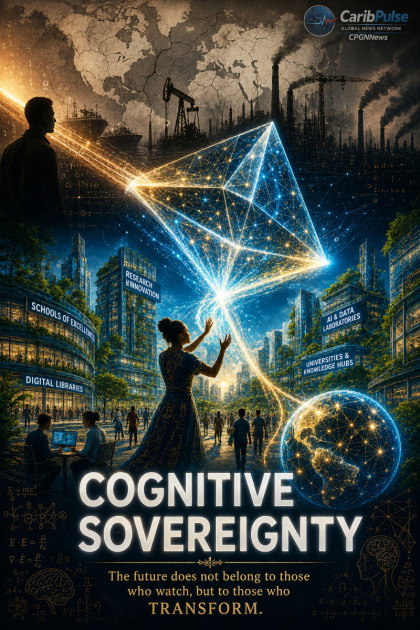
For centuries, sovereignty has been defined primarily by control over territory, borders, institutions, and natural resources. With the rise of the digital age, a new dimension gradually emerged. States came to understand that control over data, communication networks, and digital infrastructure had become an essential component of national independence. Artificial intelligence pushes this evolution even further by giving rise to a concept that is likely to become central in the decades ahead: cognitive sovereignty.
This concept refers to a nation’s ability to generate, organize, protect, and continually renew its own intellectual capital. It extends far beyond technology and data alone. It encompasses the quality of education, the vitality of scientific research, academic freedom, media independence, cultural creativity, linguistic proficiency, and the collective ability to understand global transformations without relying exclusively on analyses produced elsewhere. A society can import equipment, software, and infrastructure. It cannot, however, sustainably import the critical thinking of its citizens or their capacity for innovation.
In this context, cognitive sovereignty becomes as strategically important as national security or economic stability. A population capable of exercising independent judgment, verifying information, understanding the mechanisms of emerging technologies, and contributing to the production of knowledge constitutes the first line of defense against disinformation, digital manipulation, and new forms of intellectual dependence. Conversely, a society that gradually delegates its capacity for reflection to platforms it neither owns nor controls exposes itself to a silent erosion of autonomy whose consequences may prove profound.
For Haiti, this concept carries particular significance. Economic hardship, institutional crises, and security challenges understandably dominate public debate. Yet no strategy for national recovery can produce lasting results if it neglects the reconstruction of the country’s intellectual capital. Educating citizens capable of rigorous thinking, creativity, entrepreneurship, and innovation is not a secondary ambition. It is the condition that will ultimately strengthen every other public policy, whether in security, justice, healthcare, environmental protection, or economic development.
Cognitive sovereignty is not opposed to international openness. Quite the contrary. It enables nations to participate in global exchanges from a position of confidence and responsibility rather than dependence. Countries that master their own intellectual development will be better prepared to cooperate, innovate, and defend their interests in a world where competition will increasingly revolve around the production of knowledge. In this emerging global order, true independence will no longer be measured solely by the strength of institutions or economic performance. It will also be measured by a people’s ability to think freely, generate their own ideas, and pass that intellectual freedom on to future generations.
From Digital Urgency to a National Doctrine of Cognitive Sovereignty
History teaches that nations achieve sustainable progress only when they succeed in transforming technological disruption into political vision. The Industrial Revolution did not merely produce new machines. It led to the creation of technical schools, modern universities, adapted financial systems, new public administrations, and an economic organization capable of supporting innovation. The digital revolution followed a similar logic. The countries that benefited most were those that invested simultaneously in infrastructure, education, research, and governance. Artificial intelligence now requires a transformation of similar magnitude. It cannot be reduced to a simple software program. It calls for a true national doctrine.
For Haiti, this doctrine should rest on a simple conviction: the country’s primary wealth is neither its subsoil, nor its geographic position, nor even its diaspora, as remarkable as it may be. Its primary wealth lies in the intellectual capacity of its population. Any national strategy must therefore begin by protecting, developing, and enhancing this cognitive capital. Such an ambition requires treating education, scientific research, innovation, culture, and knowledge production as strategic investments on the same level as infrastructure, energy, or security.
This doctrine must also recognize that artificial intelligence is not just another economic sector. It is a cross-cutting technology that will transform agriculture, health, justice, public administration, the environment, security, transportation, education, and business. A fragmented response limited to isolated initiatives would therefore be insufficient. The country needs a coordinated vision capable of mobilizing ministries, universities, local authorities, the private sector, civil society organizations, and the diaspora around shared objectives.
Such a strategy should pursue several complementary goals. It must ensure equitable access to digital technologies while reducing territorial and social inequalities. It must strengthen the teaching of science, mathematics, programming, languages, philosophy, and critical thinking in order to form citizens capable of understanding the tools they use. It must encourage applied research on Haiti’s specific challenges, support young innovative entrepreneurs, develop partnerships with foreign universities, and create a favorable environment for a national innovation ecosystem. Finally, it must integrate ethical governance ensuring data protection, transparency of automated decisions, institutional accountability, and respect for fundamental rights.
However, this doctrine should not be interpreted as a purely technological program. Its ultimate purpose is profoundly human. It is about turning artificial intelligence into a lever of development without ever allowing it to replace responsibility, creativity, or intellectual freedom. A society that masters technology without preserving its humanism risks losing the very meaning of progress. Conversely, a nation that places human intelligence at the center of its strategy can transform innovation into an instrument of prosperity, justice, and stability.
Human Intelligence Will Always Remain the First Technology
Every era is tempted to believe that its technological revolution will permanently reshape the human condition. Past centuries have known similar convictions with the steam engine, electricity, the automobile, nuclear energy, or the internet. All of these innovations profoundly transformed our societies. Yet none replaced what lies at the foundation of all civilization: the human capacity to imagine, create, cooperate, transmit knowledge, and give meaning to collective destiny. Artificial intelligence, despite its growing power, is no exception.
The real challenge of the 21st century is therefore not how far machines will advance. It is how far societies will be able to develop their own intelligence to accompany this evolution. The countries that succeed will not necessarily be those with the most powerful algorithms or the largest computing centers. They will be those that have preserved children’s curiosity, strengthened the quality of their schools, protected academic freedom, encouraged scientific research, valued artistic creation, and cultivated a critical spirit capable of resisting both simplification and manipulation.
For Haiti, this revolution represents both a historic responsibility and an extraordinary opportunity. Since its independence, the country has often faced immense challenges under conditions of limited resources. Yet its history demonstrates that a nation can exert influence far beyond its economic weight when it relies on a clear vision, consistent political will, and trust in its people’s capabilities. Artificial intelligence now offers the possibility of opening a new chapter of this history—not by imitating major powers, but by building a development model based on intelligence, education, ethics, creativity, and cognitive sovereignty.
This ambition requires time, persistence, and a commitment that goes beyond political cycles. The most significant benefits will likely not appear within a single government term. They will be measured across a generation. This is precisely why the decisions made today are so crucial. They will determine whether Haiti’s youth become designers of the digital world of tomorrow or merely its users.
At the end of this reflection, one conviction stands out. Artificial intelligence will never decide the destiny of nations on its own. The real decisions will always belong to the men and women who choose how to use it, regulate it, and pass it on. Societies that understand this truth will turn artificial intelligence into a multiplier of their collective genius. Others risk discovering, too late, that by gradually delegating their decisions to machines, they have largely abandoned the exercise of their own intelligence.
The future will not depend on algorithms. It will always depend on the quality of the citizens who design, govern, and use them. Ultimately, the most decisive technology of the 21st century may never be artificial intelligence itself. It will remain, as it has since the dawn of humanity, human intelligence.
The Time to Act Is Now
Great historical transformations never wait for societies to be fully prepared. They reward those who recognize changes early and make necessary decisions before they become obvious. Artificial intelligence follows this logic. It is no longer an emerging technology confined to research laboratories or major Silicon Valley companies. It is already shaping how citizens learn, work, produce, communicate, innovate, and participate in democratic life. Each passing month accelerates this transformation.
For Haiti, the challenge goes far beyond adopting new digital tools. It is about determining the country’s place in a world where knowledge is becoming the primary source of wealth creation and where innovation increasingly defines national competitiveness. Waiting for external solutions would mean accepting a passive role in a revolution that is reshaping economic, scientific, and cultural power relations. Conversely, launching today a strategy based on education, research, innovation, and digital governance would place the country on a path of sustainable transformation.
This responsibility does not belong to the state alone. Universities, schools, businesses, media, civil society organizations, the diaspora, and international partners all share a part of this collective duty. Cognitive sovereignty cannot be established by decree. It results from the continuous mobilization of all national forces around a common goal: making human intelligence the primary engine of development.
History sometimes offers windows of opportunity that appear only once. The artificial intelligence revolution is one of them. The decisions made in the coming years will determine not only states’ ability to benefit from new technologies, but also their capacity to preserve intellectual autonomy, creativity, and innovation in an increasingly competitive global environment. Future generations will judge less the speeches made today than the strategic choices taken to prepare their future.
Human Intelligence Will Always Be the First Competitive Advantage
From the beginning of this reflection, a conviction has gradually emerged. Artificial intelligence is not merely a technological innovation. It marks the beginning of a new stage in human history, comparable to the great scientific and industrial revolutions that profoundly reshaped societies. Like all major disruptions, it opens vast opportunities while raising unprecedented questions about the future of work, education, governance, democracy, and development.
Faced with this transformation, two opposing attitudes must be avoided. The first is to see artificial intelligence as an inevitable threat against which resistance is futile. The second is to believe it will spontaneously solve all societal challenges. Neither view withstands scrutiny. Artificial intelligence is neither fate nor miracle. It remains a tool whose impact will always depend on the quality of institutions, public policies, and, above all, the men and women who choose to use it.
For developing countries, and particularly for Haiti, this revolution represents a decisive moment. Economic constraints are real. Institutional challenges are numerous. Yet never in contemporary history has intellectual capital played such a decisive role in wealth creation, economic competitiveness, and national sovereignty. Investing in education, scientific research, critical thinking, innovation, and digital skills is no longer just one policy among others. It is now an essential condition for sustainable development and strategic independence.
The real question is therefore not whether artificial intelligence will replace humans. It is which humans will be able to work with it, understand it, govern it, and improve it. Societies that develop these skills will gain a lasting advantage. Others risk increasing their dependence on technologies they neither master nor control.
Ultimately, those who ignore artificial intelligence will indeed be replaced by those who master it. But this mastery is not limited to using software or learning a new tool. It is rooted in the capacity to think, learn, create, challenge assumptions, and place human intelligence at the center of innovation. It is precisely this free, critical, creative, and responsible intelligence that will continue to distinguish nations capable of shaping their own future from those that will merely endure the one designed by others.
Beyond Artificial Intelligence, a Civilizational Revolution
Major historical disruptions never transform tools alone. They gradually redefine how societies understand themselves, organize their institutions, and envision their future. The printing press transformed the circulation of knowledge. The Industrial Revolution reshaped work and economies. The internet reconfigured global communication. Artificial intelligence belongs to this category of transformations that extend far beyond technology. It is already changing our relationship with knowledge, decision-making, creation, responsibility, and, more profoundly, intelligence itself.
This evolution forces states, universities, businesses, and citizens to rethink long-held assumptions. For decades, economic power relied primarily on natural resources, industrial capacity, or market size. Today, the decisive factors increasingly lie in knowledge production, human capital quality, scientific research, and the collective ability to transform information into innovation. International competition is thus shifting toward an economy where intelligence becomes the primary strategic resource.
This new reality also imposes ethical responsibility. Societies must decide which functions they are willing to delegate to machines and which responsibilities must remain exclusively human. Efficiency can never be the sole criterion. Decisions related to justice, dignity, fundamental freedoms, data protection, education, or democracy will continue to require human judgment that no algorithm, however advanced, can replace.
It is precisely within this balance that the future will be decided. Nations that view artificial intelligence merely as a market risk limiting its benefits to short-term economic gains. Those who see it as a civilizational transformation will understand that their main investment lies not only in technology, but in educating a population that is informed, free, creative, and capable of governing these systems with discernment. Sustainable prosperity will belong to societies that understand that artificial intelligence does not diminish human intelligence—it increases its strategic importance.
Ultimately, the 21st century will not be defined by machine power, but by how human beings choose to use that power. This collective decision will distinguish societies capable of shaping their own destiny from those that allow technological change to define it for them.
Future Generations Will Judge Our Choices
Every generation inherits a world it did not build and leaves to the next one a world it has helped transform. This responsibility now takes on a particular dimension. Decisions related to artificial intelligence will not only affect markets, businesses, or public administrations. They will also have a lasting influence on how children learn, how citizens exercise critical thinking, how democracies function, and how nations preserve their capacity to innovate.
History will likely record that the first quarter of the 21st century was defined less by the emergence of artificial intelligence itself than by the collective choices that shaped its development. Some societies will have invested in education, scientific research, culture, ethics, and governance. Others will have prioritized technological performance alone, neglecting the human foundations of innovation. This difference—almost imperceptible today—could become one of the main factors explaining disparities in prosperity, stability, and global influence in the decades to come.
For Haiti, as for the wider Caribbean, the challenge goes beyond digital modernization. It is about preparing a generation capable of fully participating in knowledge production, in creating solutions adapted to its own realities, and in governing the technologies that will reshape the world. A nation that invests in the intelligence of its youth builds an advantage that neither economic crises nor technological disruptions can easily take away.
Future generations will not ask how many artificial intelligence applications we used. They will ask whether we had the clarity and courage to invest in their intelligence, in their freedom to think, and in their capacity to build a more just, more innovative, and more resilient society. It is to that question that our time will ultimately be held accountable.
Yvon Bonhomme
Analyst in Public Governance and Sustainable Development
CPGNNews | CaribPulse Global News Network
This text was published by CPGNNews | CaribPulse Global News Network as part of its strategic analysis mission on the geopolitical and technological transformations of the 21st century.
