


By the CPGNNews Editorial Team
April 2026.
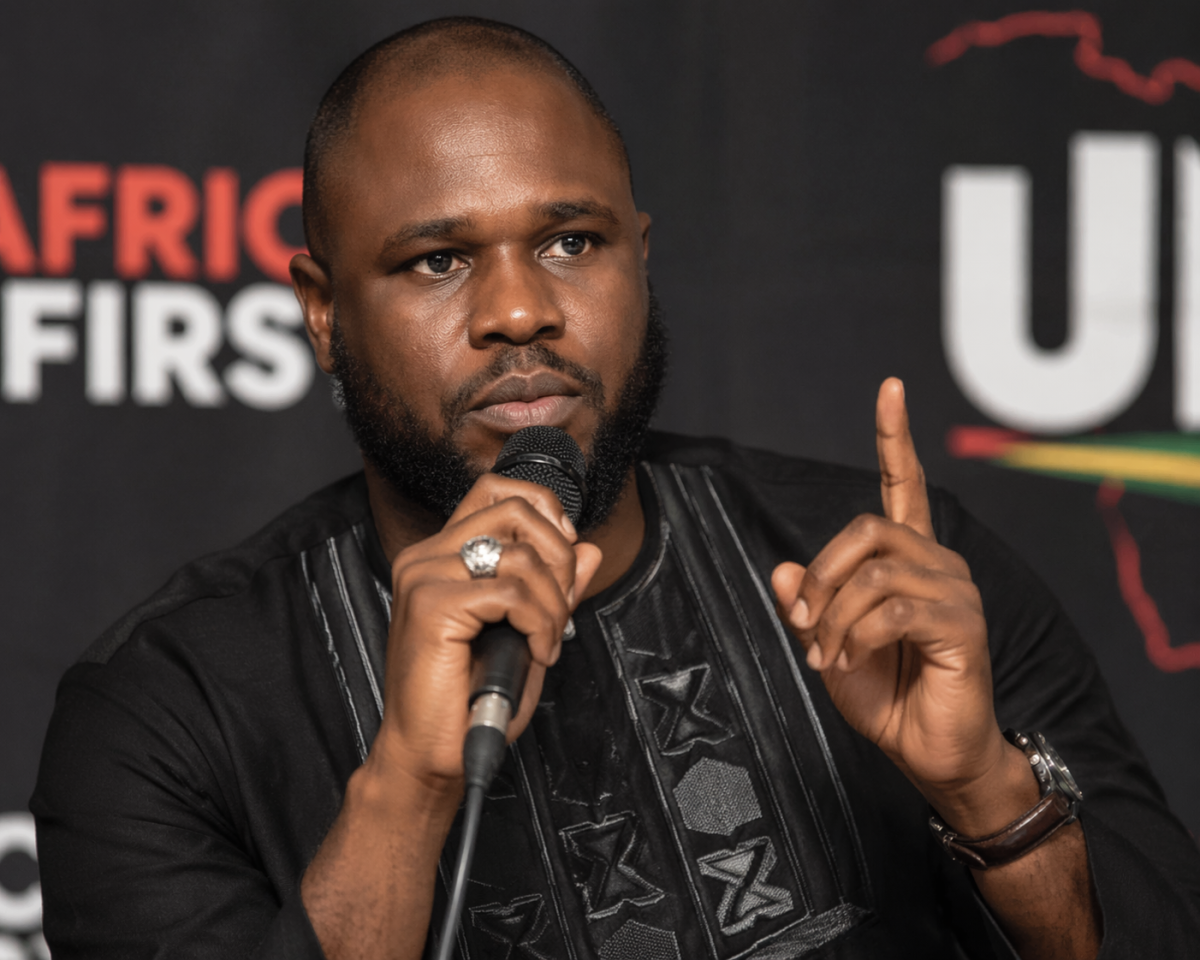
The arrest of Kemi Seba took place in Pretoria, South Africa, where he was detained by the South African Police Service as part of an operation carried out in coordination with international law enforcement mechanisms, according to multiple sources, including BBC News and France 24.
The arrest is linked to an international warrant issued by Benin in December 2025, within the framework of an extradition request. Beninese authorities have reportedly cited allegations related to incitement and threats to state security, although the full judicial details have not yet been publicly examined in court at the time of writing.
Following the arrest, South African authorities confirmed the detention, stating that it was carried out in accordance with domestic legal obligations tied to international cooperation and extradition procedures. Beninese officials have described the request as part of a lawful judicial process. However, representatives of Kemi Seba have rejected the legitimacy of the allegations, arguing that the case is politically motivated.
Reactions have been swift and sharply divided. Supporters of Kemi Seba view the arrest as part of a broader pattern of pressure against critical voices in global political and economic systems. Others, including institutional actors, emphasize the importance of allowing judicial processes to proceed without interference and within established legal frameworks.
The case reflects the trajectory of a figure who has become a central voice in contemporary Pan-African discourse. Through his involvement with Urgences Panafricanistes, Kemi Seba has positioned himself as a vocal critic of relations between African states and external powers. His advocacy for political and monetary sovereignty has gained significant support in certain circles while also attracting sustained criticism from analysts and institutions, including the International Crisis Group.
Legally, the case falls within the framework of international extradition cooperation. Such procedures typically require judicial review in the arresting country to determine whether the request complies with domestic law and international obligations. Organizations such as Amnesty International regularly stress that extradition processes must uphold fair trial guarantees and respect for fundamental rights.
More broadly, the arrest occurs against a backdrop of shifting political dynamics in Francophone Africa and evolving international alignments, including relations with France. Research institutions such as Chatham House and the Council on Foreign Relations have highlighted these transformations as part of a wider geopolitical realignment.
The case also raises recurring questions about the boundary between political dissent and public order. For authorities, the arrest represents the enforcement of lawful decisions within an established legal framework. For supporters, it reflects broader concerns about shrinking space for political expression. Between these positions, the boundary remains fluid and context-dependent.
At the same time, information flows have played a significant role in shaping perceptions of the case. Social media platforms and digital news ecosystems have amplified competing narratives, contributing to sharply divergent interpretations of the same events. Research from the Reuters Institute for the Study of Journalism highlights how such dynamics increasingly fragment public understanding of political and legal developments.
In the short term, the evolution of the extradition process and the rulings of South African courts will be decisive. The transparency of authorities and the presentation of evidence will also play a central role in shaping the trajectory of the case.
Beyond Africa, some observers have drawn parallels with other postcolonial societies, including Haïti, where questions of sovereignty, governance, and political legitimacy remain deeply embedded in public debate. Without drawing direct equivalence, these contexts reflect broader global tensions around authority and dissent.
At this stage, the arrest of Kemi Seba remains an evolving case whose significance will depend both on judicial outcomes and on the competing interpretations that continue to surround it.
By the CPGNNews Editorial Team
CaribPulse Global News Network
Centre for Post-Colonial Geopolitics & News.
Section: Global Perspective – Reading from the Caribbean
April 2026.
© CPGNNews – All rights reserved.
